August 8, 2024 · Magati Joel
Building a Community Hub: A Church Website with Django
Discover how to build a feature-rich church website from the ground up using the powerful Django framework, covering everything from blogs to event management.
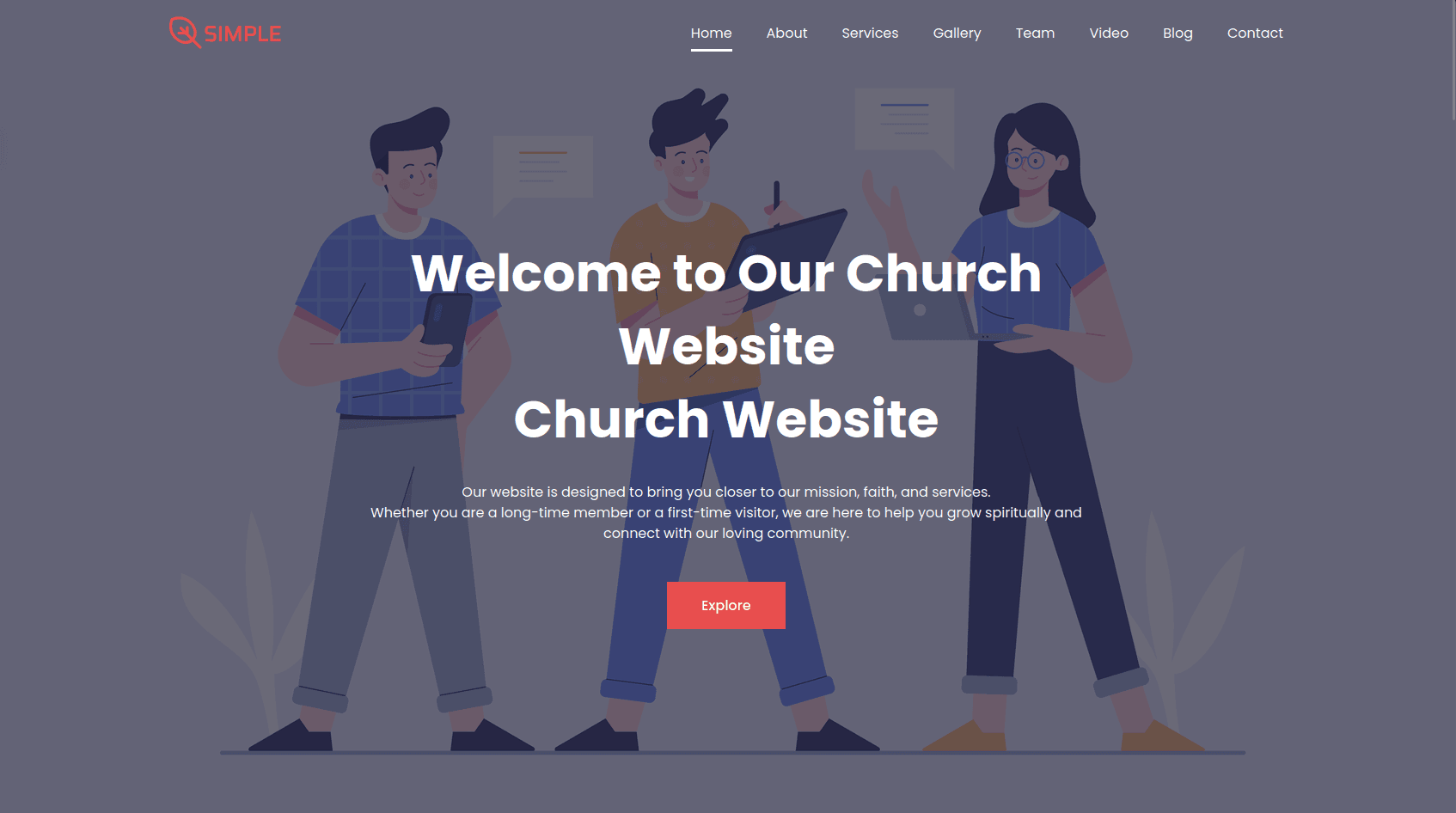
Why This Project Exists
A church website should be more than a page containing a location and Sunday service times.
It can become a digital home for sermons, announcements, events, ministries, media, and community information.
The challenge is that many church teams need to update their content regularly but may not have a developer available every time something changes.
I wanted to build a website that looked modern to visitors while remaining manageable for non-technical administrators.
The Problem
A static website becomes outdated quickly when an organization publishes frequent announcements and events.
Church administrators need to update:
- Sermons
- News
- Upcoming events
- Ministry information
- Media content
- Service schedules
- Contact details
Editing source code for every update was not practical.
The website needed a content-management workflow, secure administration, responsive pages, and a structure that could grow as the organization added more content.
My Approach
I selected Django because it provides a strong foundation for content-driven websites.
I created separate models for blog posts, sermons, events, ministries, and media content. These models are managed through the Django Admin dashboard, allowing authorized users to publish and update information without touching the codebase.
The frontend uses reusable Django templates so shared elements such as the header, footer, navigation, and page layout remain consistent.
I also created dedicated sections for youth, men, children, sermons, news, and upcoming activities.
The homepage acts as a summary of the entire community, while individual pages provide more detailed content.
Interesting Challenges
Content modeling required careful planning.
A sermon is not exactly the same as a blog post. It may need a speaker, scripture reference, audio link, video link, date, series name, and downloadable notes.
Events also needed dates, times, locations, descriptions, and status handling for past and upcoming activities.
Deployment introduced another set of challenges. Static files worked locally but initially failed in production. Configuring ALLOWED_HOSTS, WhiteNoise, static directories, and the deployment environment was essential.
I also had to balance a visually rich homepage with good performance, especially when including carousels, images, and embedded YouTube videos.
The Tech Stack
The project uses:
- Python
- Django
- Django Admin
- HTML
- CSS
- Bootstrap
- JavaScript
- WhiteNoise
- Render
Django's built-in authentication and administration tools made it possible to focus on the organization's needs rather than rebuilding common backend functionality.
Lessons Learned
A good content-driven website starts with good data models.
If the underlying content structure is unclear, both the admin experience and public pages become difficult to maintain.
I also learned that the administrator is just as important a user as the public visitor. A beautiful website becomes less valuable if updating it is frustrating.
Deployment should also be considered early. Static files, media uploads, environment variables, and database configuration can affect architectural decisions.
Final Thoughts
This project showed me how a website can support an active community rather than simply advertise an organization.
Django provided the reliability and structure needed for publishing content, managing users, and expanding features over time.
The most satisfying part was creating a platform that could continue serving the church after development was complete.
A successful community website should not require a developer for every announcement. It should give the organization the confidence to manage its own digital presence.