August 5, 2024 · Magati Joel
Building FinTrack AI: An Intelligent Finance Tracker with Next.js
A deep dive into creating FinTrack AI, a personal finance app that uses AI for receipt scanning and offers personalized financial advice.
Why This Project Exists
Most finance trackers are good at telling users what they already did.
They record expenses, display charts, and show account balances. That information is useful, but I wanted to explore a more interesting question:
What if a finance tracker could also help users understand their decisions?
That idea became FinTrack AI, a personal finance application that combines traditional expense tracking with AI-powered assistance.
The Problem
Managing personal finances involves more than entering numbers into a spreadsheet.
Users need to:
- Record income and expenses
- Organize transactions
- Understand spending patterns
- Track budgets
- Read receipts
- Compare categories
- Make better financial decisions
Manual entry creates friction, especially when users have many small transactions.
Charts can show where money went, but they do not always explain what the user should do next.
I wanted to design an application that combined clear financial data with useful, personalized guidance.
My Approach
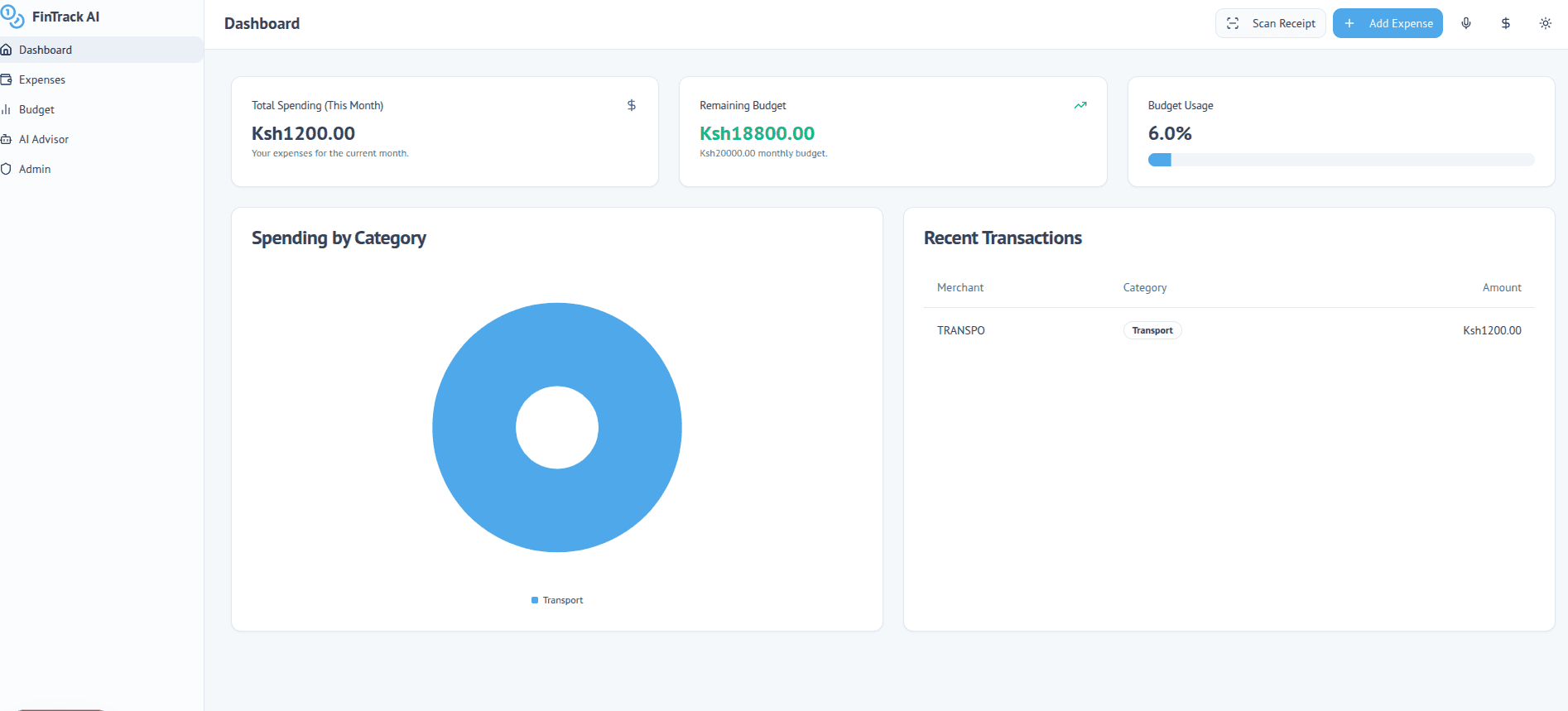
I built FinTrack AI with Next.js and created a dashboard that brings transactions, budgets, accounts, and spending insights together.
Users can record expenses manually or upload receipt images. The AI workflow analyzes receipt content and extracts useful information such as the merchant, date, items, and total.
The application also includes an AI financial assistant that uses the user's financial context to generate practical observations and suggestions.
The interface includes:
- Income and expense summaries
- Category breakdowns
- Spending charts
- Recent transactions
- Budget progress
- Multi-currency support
- Receipt scanning
- AI-generated advice
The application was also designed as a Progressive Web App so it could feel more like an installed finance tool on mobile devices.
Interesting Challenges
Financial data requires precision.
A small rounding error or inconsistent currency format can damage user trust. I needed to ensure values were handled consistently throughout forms, calculations, charts, and summaries.
Receipt extraction presented another challenge. Receipts vary significantly in layout, quality, font size, and terminology. The AI output needed validation before being treated as application data.
The financial assistant also needed guardrails. Advice should be helpful without pretending to replace a licensed financial professional.
Another challenge was keeping the dashboard informative without overwhelming the user. Too many charts can make financial information harder rather than easier to understand.
The Tech Stack
FinTrack AI uses:
- Next.js
- React
- TypeScript
- AI workflow
- Google Gemini
- ShadCN UI
- Tailwind CSS
- Recharts
- React Hook Form
- Zod
- React Context
- Progressive Web App features
The stack provided a combination of structured forms, responsive UI, data visualization, and generative AI capabilities.
Lessons Learned
AI-generated data should always be treated as a suggestion until it has been validated.
This was especially important for receipt scanning. The model could accelerate data entry, but users still needed the ability to review and correct the result.
I also learned that dashboards should prioritize decisions, not decoration. Every chart should answer a useful question.
Finally, financial applications require thoughtful language. Users may be dealing with sensitive situations, so the interface should feel supportive rather than judgmental.
Final Thoughts
FinTrack AI was an opportunity to combine practical financial tooling with modern AI capabilities.
The project goes beyond recording transactions by helping users understand their financial habits and discover possible improvements.
There is still room to expand the platform with recurring transactions, savings goals, bank integrations, stronger authentication, and encrypted cloud storage.
The project reinforced an important idea: AI is most valuable when it helps users make sense of information they already have.