July 25, 2024 · Magati Joel
Developing a Full-Stack Booking App with Next.js and ShadCN UI
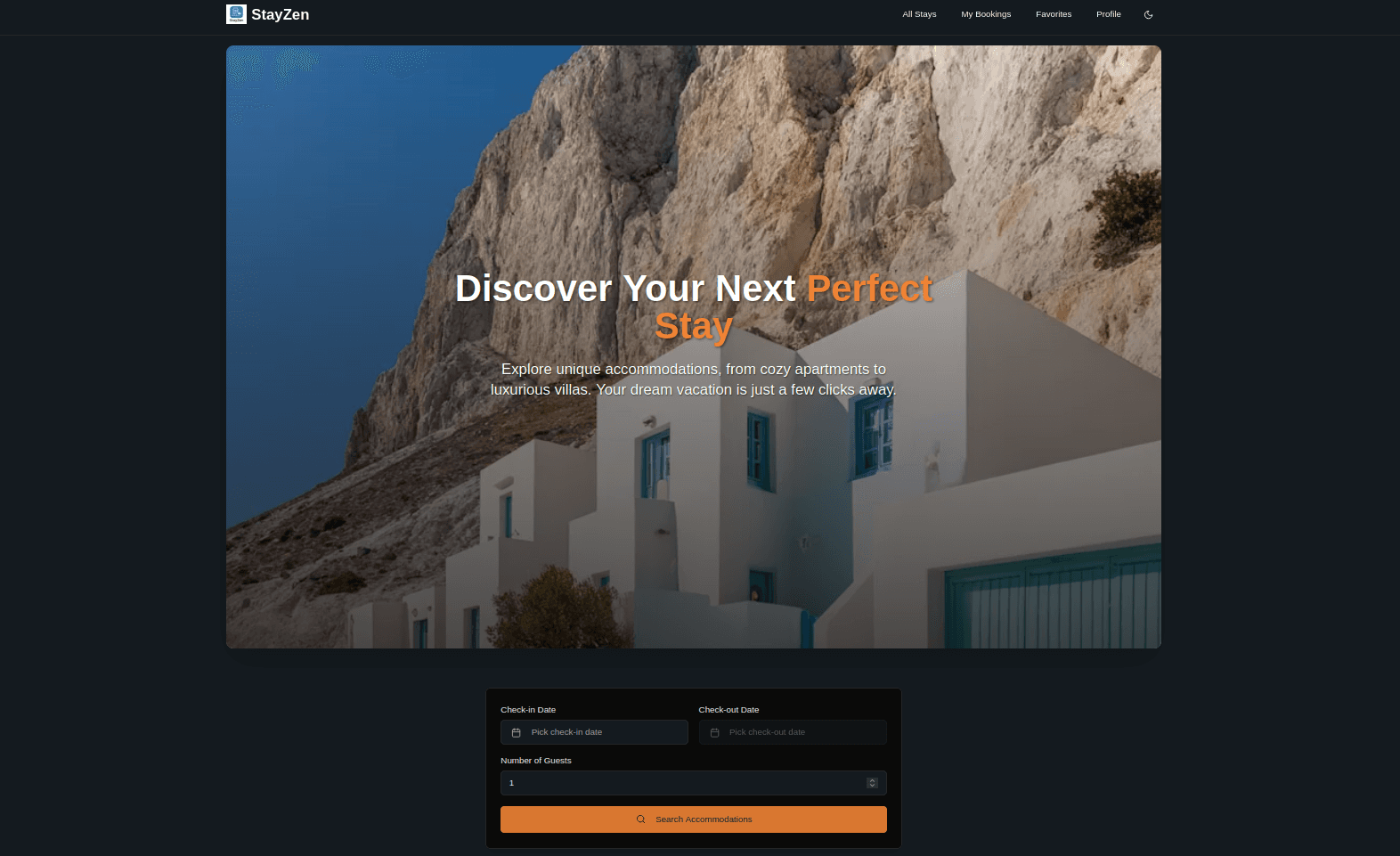
An overview of building StayZen, a feature-rich accommodation booking platform with a separate admin dashboard.
Why This Project Exists
Finding accommodation online should feel exciting.
Instead, booking platforms can sometimes make the experience feel like paperwork. Users move through crowded pages, unclear filters, hidden prices, and long forms before they can reserve a room.
I created StayZen to explore a calmer and more focused accommodation-booking experience.
The Problem
A booking platform must serve two very different audiences.
Guests need to:
- Browse properties
- Search by location
- Filter results
- View photos
- Compare prices
- Save favorites
- Select dates
- Make bookings
Administrators need to:
- Add and edit properties
- Manage rooms
- Review reservations
- Update availability
- Monitor users
- Maintain pricing and content
The application needed to keep both experiences connected without mixing their interfaces or responsibilities.
My Approach
I built StayZen using the Next.js App Router and TypeScript.
The public-facing application focuses on discovery. Users can browse accommodation cards, open detailed property pages, explore image galleries, apply filters, save favorites, and continue into the booking flow.
A separate admin dashboard handles management tasks.
ShadCN UI and Tailwind CSS provided reusable components for forms, dialogs, cards, filters, tables, and navigation.
React Hook Form and Zod manage validated inputs throughout the admin area, reducing the risk of incomplete property and booking data.
I also added Progressive Web App support so the platform could be installed and opened with a more app-like experience.
Interesting Challenges
Date-based availability was one of the most important challenges.
The application needed to prevent invalid date ranges and eventually support checking whether a property was already booked during the requested period.
Search and filtering also required careful state management. Location, price, property type, amenities, and guest counts all needed to work together without making the URL or interface confusing.
The image gallery presented another challenge, especially on mobile devices where screen space is limited.
Separating the customer application from the admin dashboard helped reduce complexity, but both still needed to share consistent data models and validation rules.
The Tech Stack
StayZen uses:
- Next.js
- React
- TypeScript
- Tailwind CSS
- ShadCN UI
- React Hook Form
- Zod
- Progressive Web App features
- Responsive image galleries
The architecture was designed to support future integration with a database, authentication provider, and payment gateway.
Lessons Learned
A booking platform is fundamentally a state-management problem.
Dates, guests, prices, availability, filters, favorites, and user sessions all influence what the interface should display.
I learned that a clear booking flow is more valuable than adding many unnecessary features. Users should always understand what step they are on and what happens next.
The admin experience also deserves the same design attention as the customer-facing website. Poor management tools eventually affect the quality of the public platform.
Final Thoughts
StayZen allowed me to combine product discovery, responsive design, complex forms, and administrative workflows in a single project.
The application is designed around one main idea: accommodation booking should feel calm rather than complicated.
Future improvements include authentication, real availability checks, payments, reviews, maps, messaging, and booking notifications.
The project gave me a deeper appreciation for the amount of logic hidden behind a simple “Book Now” button.